

01–03 • Discovery
From market monitoring to a tested Candidate Node.

01 • Market Monitoring
Price, volume, liquidity, volatility, market structure, blockchain activity, macro developments, and unusual activity are continuously evaluated.

02 • Market Regime Analysis
Models and analysts identify the current regime—trend, range, event-driven, high- or low-volatility, and liquidity dislocation—before interpreting signals.

03 • AI & Quantitative Screening
Multiple datasets and indicators are evaluated together. A single indicator is never sufficient. Aligned conditions become a Candidate Node for deeper testing.
04–06 • Validation
From quantitative testing to classification and post-trade review.
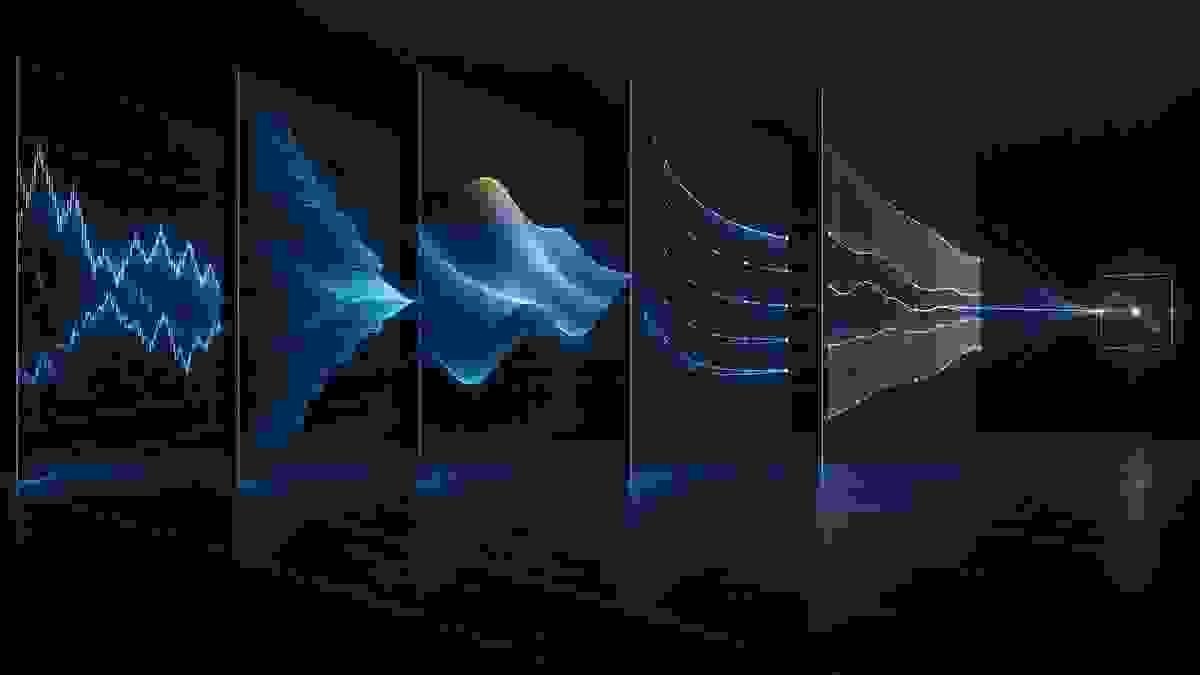
04 • Quantitative Validation
Candidate nodes are tested against historical data, comparable market conditions, volatility regimes, and scenarios to expose weaknesses, estimate uncertainty, and reject candidates below the research standard.

05 • Analyst & Risk Review
Analysts examine market context, news, macro developments, liquidity, abnormal behavior, model assumptions, timing, and invalidation factors. They may approve, reclassify, return, or reject a candidate.

06 • Classification & Feedback
Only candidates that survive review become Validated Trade Nodes with a defined market, direction, time window, evidence, risk context, and invalidation conditions. Outcomes are reviewed and fed back into research.